Blood Cleanup
Walls, carpets, furnishings and hard floors receive blood cleanup, with safe disposal afterward.
See blood cleanupArrange school and daycare biohazard cleanup in Westfield for blood, bodily fluids, sharps and contaminated materials. Work can be planned outside class hours when the site and situation allow.
School biohazard cleanup covers the controlled cleanup and disinfection of contamination in daycares, schools and education facilities, including blood, other bodily fluids, sharps and affected materials.
Routine janitorial work is not the same as this process. Technicians first establish the boundaries of the affected space and shield nearby areas. They remove waste and visible soil before disinfecting hard surfaces for the product label's stated contact time. Materials that could have absorbed contamination are also examined.
A cleanup may be necessary in learning rooms, school buses, bathrooms, dining spaces, nurse offices, staff rooms or buildings near a playground. The required scope is shaped by the event itself, which materials were exposed and where fluids spread. Administrators can manage building security and confidential student information while choosing the safest time for the full process.
To protect privacy for families, students and employees, crews may use unmarked vehicles and screen the cleanup space from view.
You can see what will be cleaned, what may need removal and which rooms must remain closed before work begins.
Backpacks, learning materials and personal property can be isolated for decisions by the school contact instead of being moved without direction.
Available waste paperwork, images and documentation of agreed work may be arranged for insurance companies, school leaders and property owners.
Routine custodial procedures may not be safe for some types, amounts or locations of contamination. School biohazard cleanup keeps the impacted space controlled so material does not travel into occupied parts of the building. Common reasons to arrange this work include:
A small contained area no longer holds the bodily fluids, or the urine, feces or vomit enters soft surfaces.
Someone finds an abandoned needle, lancet or damaged sharp in a school bathroom, outside on campus or by playground space.
Affected restroom areas include partitions, the edges of walls, drain openings, nearby fixtures or grout lines.
Children remain away while the closed rooms undergo scheduled disinfection and cleaning.
Begin by protecting students and staff, keeping private information secure and preventing material from moving elsewhere. Initial decisions should follow the school's emergency plan. Before the cleaning team starts:
Call (888) 440-9227Published cost guides do not include a range specifically for schools. The usual national figure published by Fixr for general biohazard cleanup is $3,000 to $5,000 and its wider span runs from $1,500 to $25,000. For residential jobs, Yelp reports $1,800 to $4,500 while most projects in the BioRecovery cost guide are $2,500 to $8,000 in price. The school total is shaped by access requirements, waste, affected materials and the size of the area.
Published national cost guides are the source for these ranges, rather than an inspection of your property. The price for your property is set after the on-site assessment, and you hear it before work starts.
Ask about cost: (888) 440-9227Commercial property coverage or a liability policy may pay for school biohazard cleanup. The result varies according to the incident, deductible and policy terms. The district, school, property owner or daycare operator should notify the insurance company quickly and learn which documents it needs for the claim.
Check if property insurance includes both the event that caused contamination and the required cleaning. Write down your claim identifier and all directions from the adjuster.
Homeowners or renters insurance, the estate or the property owner usually pays for this kind of cleanup. The Maryland crime victim compensation program helps only when a crime caused the loss.
Ask what the insurance company wants before disposal. Photos, the work scope, invoices and waste records may help document the loss.
The rental agreement may allocate duties to both the daycare operator and the building owner. If responsibility is unclear, check the lease and contact both insurance companies.
Each stage of school biohazard remediation follows an organized order. Planning by trained professionals accounts for the contaminated space, property access and restrictions that keep students and staff who lack authorization away.
Cleanup technicians identify visible contamination, likely paths of travel, porous materials, nearby rooms and any access or privacy limits.
The affected zone is isolated to block entry, and uncontaminated pathways are established for moving waste and supplies.
Each worker uses protective equipment chosen for the risk. Any sharps are collected with tools and placed in puncture-resistant containers.
Soft playthings, ceiling tiles, carpet padding, bare wood and similar items are set apart for proper disposal when full disinfection is not possible.
Any visible substance is cleared prior to applying disinfectant. The method for cleaning non-porous areas starts where impact is lower and advances to the affected zone.
Workers choose EPA-registered disinfectants suited to each surface and keep the application wet throughout the label contact time.
Workers prepare and mark contaminated materials before moving them away from children and disposing of them according to governing state and local regulations.
Completed cleaning is reviewed alongside the designated school contact, with disposal records, images and other requested materials organized for facility documentation.
Call at any time. You speak with a school and daycare biohazard cleanup specialist who outlines the process and schedules a start time with you.
Blood, contaminated sharp items and bodily fluids can present major risks to health. Careful waste disposal, personal protective gear and a controlled cleanup are needed to address the hazards.
Floors, shared objects and playthings are touched often by young children. Restricting the affected area helps prevent shoes, hands and movable items from carrying residue elsewhere.
Broken affected materials and discarded needles pose puncture hazards. Proper sharps containers are required for needles, and applicable regulations govern how other biological waste is packaged.
Carpet backing, baseboards, unsealed wood, grout and floor gaps can absorb liquid. Contamination left behind below the top layer remains after the visible area is wiped.
Can you clean it yourself? When the school's exposure control plan permits the task, a worker with training may manage a limited spill on solid, non-absorbent material by wearing protective equipment and keeping an EPA-registered disinfectant wet for its labeled contact period. Professional cleanup is appropriate when the contamination enters porous surfaces, has no clear limits, involves sharps or falls outside the site's safe response ability.
Many sealed, non-porous surfaces at a school can remain after proper cleaning and disinfection. An absorbent item may have to be removed if fluid penetrated beyond safe reach. Replacing any flooring, fixture or wall taken out may require later restoration work.
How long the cleanup takes is determined by the size of the affected space, the kinds of surfaces involved, the amount of waste and available building access. Work limited to hard surfaces takes less time than a project involving removal of furniture, wall materials or carpet. Before employees or students reenter the closed space, the designated school contact should authorize access.
| Scene | Typical time on site |
|---|---|
| Limited hard-surface school area | Often the quickest job once entry has been approved |
| A childcare space or classroom containing varied materials | Longer when furniture and personal property require separate decisions |
| Removal of absorbent materials or work across multiple rooms | Longer when removal, disposal and restoration are needed |
To remove an odor, locate and remove the affected material at its source. Fragrance is not a substitute for biohazard cleaning. Masking the smell can make remaining contamination in a drain, carpet, wall cavity or piece of furniture more difficult to detect.
Once the source is gone, remaining odor may be addressed with HEPA air filtration, controlled treatments and cleaning of compatible parts in the ventilation system. Equipment needs to be appropriate for an occupied school or childcare property. Keep students and staff without authorization outside the treatment area. The school contact must confirm when reopening is allowed.
The full school and daycare biohazard cleanup guide covers what is cleaned or removed, odor and air quality work, and the rules that apply in Maryland and Baltimore City.
Read the full school and daycare biohazard cleanup guideContainment, entry and cleanup plans can be influenced by local housing, population and access details.
At roughly 2.0 miles away, MedStar Good Samaritan Hospital is the closest listed hospital for urgent care after a cut, puncture, or exposure.
Crews coming in from Hamilton, North Harford Road or Glenham-Belhar should keep vehicles and equipment staged close to the affected property for privacy.
A cleanup plan for this neighborhood should account for adjacent homes or units when setting odor control and containment boundaries.
You can ask about cleanup in nearby communities and ZIP codes during the call.
Walls, carpets, furnishings and hard floors receive blood cleanup, with safe disposal afterward.
See blood cleanup
During cleanup, blood exposure involving hepatitis C, HIV and hepatitis B is controlled.
See bloodborne pathogen cleanup
Across care settings, commercial spaces and homes, bodily fluid cleanup includes disinfection.
See bodily fluid cleanup
Vomit is cleaned and the area disinfected to stop the spread of norovirus and other germs.
See vomit cleanup
Rentals, residences and public bathrooms receive human feces cleanup and disinfection.
See human feces cleanup
Cleanup removes sharps and needles from parks, rental sites, yards and encampments.
See needle and sharps cleanup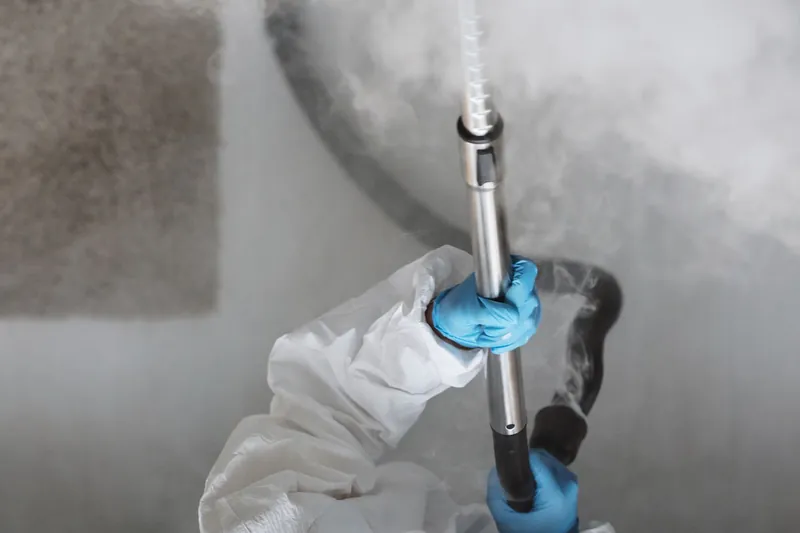
All surfaces receive full coverage with EPA-registered products for infectious disease disinfection.
See infectious disease disinfection
Biohazard waste pickup and disposal in sealed, labeled containers.
See biohazard waste disposalNo. Cleaning starts by taking away visible substances, and porous materials that absorbed them may need complete removal. The product must have EPA registration, work safely on that surface and remain wet for every minute of label-required contact time. Fragrance or a quick spray does not complete the cleanup.
Do not let anyone approach, and avoid hand contact that could involve picking up, recapping or bending the discarded needle. Someone with proper training collects the item using appropriate tools and deposits it immediately in a sharps receptacle that resists punctures. The sharps container is discarded under applicable state and local rules.
Sealed tile, metal, glass and compatible plastic can often be cleaned and disinfected. Carpet pad, ceiling tile, unfinished wood and soft items may need removal if fluids soaked in. Electronics, student records and personal belongings should be isolated and reviewed before any cleaning method is chosen.
It could. The incident, deductible and details of the business property or liability coverage determine whether the claim is covered. Notify the insurer, retain the claim number and find out what documents your adjuster requires. When the childcare business rents the facility, you may have to notify both its owner and the daycare operator.
An employee with training and suitable protective equipment may address a small spill when doing so is permitted by the school's exposure control plan. Seek professional cleanup for a broad area, a sharp, porous materials or contamination with uncertain edges. When job duties create occupational exposure, the OSHA workplace standards apply.
No standard duration applies to all schools. A contained hard-surface area takes less work than several rooms with contaminated carpet, furniture or wall material. Access restrictions, waste removal and restoration needs can change the duration. Do not allow entry until the assigned school representative says the space can reopen.
Crews carry out respectful, discreet school and daycare biohazard cleanup, arrive in unmarked vehicles and take calls 24 hours a day.